1. Chemical Make-up and Colloidal Structure
1.1 Molecular Style of Zinc Stearate
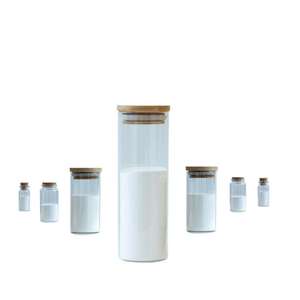
(Ultrafine zinc stearate emulsion)
Zinc stearate is a metallic soap formed by the reaction of stearic acid– a long-chain saturated fatty acid (C ₁₇ H ₃₅ COOH)– with zinc ions, resulting in the substance Zn(C ₁₇ H ₃₅ COO)TWO.
Its molecular framework includes a main zinc ion collaborated to 2 hydrophobic alkyl chains, producing an amphiphilic personality that makes it possible for interfacial activity in both liquid and polymer systems.
In bulk type, zinc stearate exists as a waxy powder with reduced solubility in water and most organic solvents, limiting its direct application in uniform formulations.
Nevertheless, when refined right into an ultrafine emulsion, the bit dimension is minimized to submicron or nanometer scale (typically 50– 500 nm), considerably raising area and dispersion efficiency.
This nano-dispersed state enhances reactivity, wheelchair, and communication with bordering matrices, unlocking superior efficiency in industrial applications.
1.2 Emulsification Device and Stablizing
The preparation of ultrafine zinc stearate solution entails high-shear homogenization, microfluidization, or ultrasonication of liquified zinc stearate in water, helped by surfactants such as nonionic or anionic emulsifiers.
Surfactants adsorb onto the surface area of spread beads or bits, reducing interfacial stress and preventing coalescence via electrostatic repulsion or steric obstacle.
Common stabilizers consist of polyoxyethylene sorbitan esters (Tween collection), sodium dodecyl sulfate (SDS), or ethoxylated alcohols, selected based upon compatibility with the target system.
Phase inversion methods may also be employed to achieve oil-in-water (O/W) solutions with narrow particle dimension circulation and lasting colloidal security.
Properly created solutions stay steady for months without sedimentation or phase separation, guaranteeing constant efficiency during storage space and application.
The resulting translucent to milklike fluid can be quickly weakened, metered, and incorporated right into aqueous-based procedures, changing solvent-borne or powder ingredients.
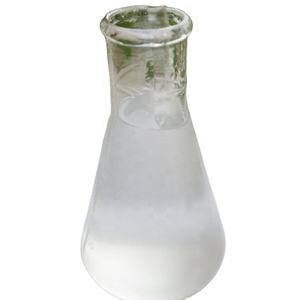
( Ultrafine zinc stearate emulsion)
2. Practical Properties and Performance Advantages
2.1 Internal and External Lubrication in Polymers
Ultrafine zinc stearate emulsion functions as a highly effective lubricant in thermoplastic and thermoset processing, operating as both an interior and exterior launch representative.
As an inner lubricant, it minimizes thaw viscosity by reducing intermolecular rubbing in between polymer chains, facilitating flow during extrusion, injection molding, and calendaring.
This enhances processability, decreases energy usage, and decreases thermal deterioration brought on by shear heating.
Externally, the emulsion develops a slim, slippery film on mold and mildew surfaces, making it possible for very easy demolding of complicated plastic and rubber components without surface flaws.
Due to its great dispersion, the solution provides consistent coverage also on intricate geometries, surpassing conventional wax or silicone-based launches.
In addition, unlike mineral oil-based representatives, zinc stearate does not move excessively or compromise paint bond, making it excellent for automobile and durable goods manufacturing.
2.2 Water Resistance, Anti-Caking, and Surface Area Modification
Beyond lubrication, the hydrophobic nature of zinc stearate passes on water repellency to coatings, textiles, and building and construction materials when used via emulsion.
Upon drying out or healing, the nanoparticles coalesce and orient their alkyl chains exterior, producing a low-energy surface that withstands wetting and wetness absorption.
This home is manipulated in waterproofing therapies for paper, fiberboard, and cementitious products.
In powdered products such as printer toners, pigments, and pharmaceuticals, ultrafine zinc stearate emulsion works as an anti-caking representative by covering fragments and minimizing interparticle friction and jumble.
After deposition and drying, it develops a lubricating layer that boosts flowability and handling qualities.
Additionally, the emulsion can customize surface area appearance, presenting a soft-touch feeling to plastic films and covered surface areas– a feature valued in product packaging and consumer electronic devices.
3. Industrial Applications and Processing Combination
3.1 Polymer and Rubber Manufacturing
In polyvinyl chloride (PVC) handling, ultrafine zinc stearate emulsion is extensively used as a secondary stabilizer and lube, complementing key warm stabilizers like calcium-zinc or organotin substances.
It reduces destruction by scavenging HCl released during thermal decomposition and avoids plate-out on handling equipment.
In rubber compounding, specifically for tires and technological items, it improves mold and mildew launch and minimizes tackiness during storage and handling.
Its compatibility with natural rubber, SBR, NBR, and EPDM makes it a versatile additive throughout elastomer sectors.
When applied as a spray or dip-coating before vulcanization, the solution makes certain clean part ejection and maintains mold and mildew accuracy over countless cycles.
3.2 Coatings, Ceramics, and Advanced Products
In water-based paints and architectural finishes, zinc stearate emulsion enhances matting, scratch resistance, and slide buildings while enhancing pigment diffusion security.
It avoids resolving in storage and decreases brush drag throughout application, adding to smoother finishes.
In ceramic floor tile production, it works as a dry-press lube, permitting consistent compaction of powders with reduced die wear and improved environment-friendly strength.
The emulsion is sprayed onto raw material blends before pressing, where it distributes equally and triggers at raised temperature levels during sintering.
Arising applications include its usage in lithium-ion battery electrode slurries, where it assists in defoaming and enhancing coating harmony, and in 3D printing pastes to minimize attachment to develop plates.
4. Security, Environmental Impact, and Future Trends
4.1 Toxicological Account and Regulatory Standing
Zinc stearate is acknowledged as reduced in toxicity, with minimal skin irritability or respiratory system impacts, and is authorized for indirect food get in touch with applications by regulative bodies such as the FDA and EFSA.
The shift from solvent-based diffusions to waterborne ultrafine solutions further lowers volatile organic substance (VOC) exhausts, aligning with environmental regulations like REACH and EPA standards.
Biodegradability research studies suggest sluggish but quantifiable malfunction under aerobic problems, largely through microbial lipase action on ester affiliations.
Zinc, though necessary in trace quantities, requires liable disposal to stop build-up in aquatic ecosystems; nonetheless, common use degrees position minimal threat.
The solution format minimizes worker direct exposure compared to airborne powders, boosting workplace security in commercial setups.
4.2 Advancement in Nanodispersion and Smart Distribution
Continuous research focuses on refining bit dimension below 50 nm making use of innovative nanoemulsification strategies, aiming to attain transparent finishings and faster-acting release systems.
Surface-functionalized zinc stearate nanoparticles are being explored for stimuli-responsive actions, such as temperature-triggered release in clever molds or pH-sensitive activation in biomedical compounds.
Crossbreed solutions incorporating zinc stearate with silica, PTFE, or graphene goal to synergize lubricity, use resistance, and thermal stability for extreme-condition applications.
Moreover, eco-friendly synthesis courses making use of bio-based stearic acid and naturally degradable emulsifiers are acquiring grip to enhance sustainability across the lifecycle.
As making needs develop towards cleaner, extra effective, and multifunctional materials, ultrafine zinc stearate emulsion sticks out as a critical enabler of high-performance, ecologically compatible surface area engineering.
Finally, ultrafine zinc stearate emulsion represents an advanced advancement in practical ingredients, changing a traditional lubricant into a precision-engineered colloidal system.
Its integration right into modern commercial processes emphasizes its duty in boosting effectiveness, product top quality, and environmental stewardship across diverse product innovations.
5. Vendor
TRUNNANO is a globally recognized xxx manufacturer and supplier of compounds with more than 12 years of expertise in the highest quality nanomaterials and other chemicals. The company develops a variety of powder materials and chemicals. Provide OEM service. If you need high quality xxx, please feel free to contact us. You can click on the product to contact us.
Tags: Ultrafine zinc stearate, zinc stearate, zinc stearate emulsion
All articles and pictures are from the Internet. If there are any copyright issues, please contact us in time to delete.
Inquiry us
Error: Contact form not found.