1. Material Fundamentals and Morphological Advantages
1.1 Crystal Framework and Inherent Features
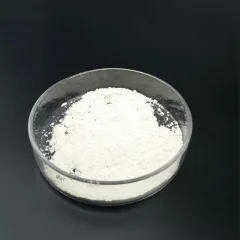
(TRUNNANO Aluminum Nitride Powder)
Spherical aluminum nitride (AlN) is a specific ceramic powder kind that maintains the exceptional physical and chemical properties of mass AlN while providing improved flowability, packing thickness, and diffusion characteristics due to its controlled spherical morphology.
Like standard AlN, it crystallizes in the hexagonal wurtzite framework, where strong covalent bonds in between light weight aluminum and nitrogen atoms provide high thermal security, exceptional electrical resistivity, and a broad bandgap of roughly 6.2 eV.
The most valued attribute of AlN is its high thermal conductivity, which can exceed 170 W/(m · K )in single crystals and get to 140– 160 W/(m · K )in high-purity polycrystalline kinds, much exceeding standard fillers like alumina (≈ 30 W/(m · K)).
This performance develops from reliable phonon transport, which is highly sensitive to lattice defects, pollutants– especially oxygen– and grain boundaries.
Oxygen contamination results in the development of aluminum jobs and second phases such as Al Two O ₃ or aluminum oxynitride (AlON), which scatter phonons and weaken thermal performance.
Therefore, high-purity spherical AlN powders are manufactured and processed under stringent problems to minimize oxygen material, normally listed below 1000 ppm, making certain optimal warmth conduction in end-use applications.
1.2 Round Morphology and Practical Benefits
The transition from uneven or angular AlN bits to spherical shapes represents a substantial development in powder design, driven by the needs of modern composite production and additive procedures.
Spherical bits display superior flowability due to minimized interparticle rubbing and surface area roughness, allowing uniform feeding in automated systems such as screw feeders, vibratory hoppers, and powder-bed 3D printers.
This enhanced flowability equates into constant dosing, minimized blocking, and boosted procedure reliability in industrial settings.
Moreover, spherical powders accomplish higher packaging densities contrasted to their angular equivalents, lessening void web content when incorporated into polymer matrices or ceramic environment-friendly bodies.
Higher filler loading straight increases the effective thermal conductivity of composites without compromising mechanical integrity or processability.
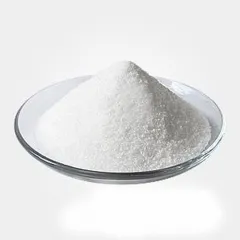
( TRUNNANO Aluminum Nitride Powder)
The smooth, isotropic surface of round AlN likewise minimizes tension focus points in polymer compounds, boosting mechanical toughness and dielectric strength.
These morphological benefits make spherical AlN particularly ideal for applications needing accuracy, repeatability, and high efficiency.
2. Synthesis Approaches and Industrial Production
2.1 Straight Nitridation and Post-Synthesis Spheroidization
The manufacturing of round light weight aluminum nitride includes either straight synthesis of spherical bits or post-processing of uneven AlN powders to attain sphericity.
One technique is the straight nitridation of liquified aluminum beads in a nitrogen-rich ambience, where surface area tension naturally drives the formation of round fragments as aluminum responds to create AlN.
This approach, while reliable, needs precise control of temperature level, gas circulation, and particle dimension circulation to prevent incomplete nitridation or agglomeration.
Alternatively, irregular AlN powders created via carbothermal reduction (Al ₂ O ₃ + 3C + N TWO → 2AlN + 3CO) can be based on high-temperature plasma spheroidization.
In this process, angular bits are infused right into a thermal plasma jet (e.g., radiofrequency or DC plasma), where they melt for a little while and assume a spherical shape due to surface tension prior to swiftly strengthening in trip.
Plasma therapy additionally aids purify the surface by volatilizing surface oxides, further boosting thermal performance.
2.2 Quality Assurance and Surface Area Design
Making certain uniformity in particle dimension distribution, sphericity, purity, and surface chemistry is important for commercial adoption.
Suppliers use laser diffraction for bit dimension evaluation, scanning electron microscopy (SEM) for morphological inspection, and X-ray photoelectron spectroscopy (XPS) to evaluate surface area composition.
Sphericity is quantified making use of shape elements such as circularity or aspect proportion, with high-performance powders normally exhibiting sphericity > 90%.
To enhance compatibility with natural matrices, round AlN particles are often surface-treated with combining representatives such as silanes or titanates.
These therapies boost interfacial attachment in between the ceramic filler and polymer material, lowering thermal limit resistance and protecting against filler jumble.
Hydrophobic layers might also be put on minimize dampness absorption, which can deteriorate dielectric properties and promote hydrolysis in moist environments.
3. Applications in Thermal Management and Advanced Products
3.1 Polymer Composites for Electronic Devices Product Packaging
Round AlN is significantly used as a high-efficiency thermal filler in epoxy, silicone, and polyimide-based compounds for electronic encapsulation, underfill products, thermal user interface products (TIMs), and published circuit card (PCBs).
In these applications, the goal is to dissipate warm from high-power semiconductor tools such as CPUs, GPUs, power amplifiers, and LED vehicle drivers.
The round morphology allows for greater filler loading– frequently going beyond 70 vol%– while keeping low thickness, allowing simple processing and thin-layer application.
This leads to composite thermal conductivities of 3– 8 W/(m · K), a considerable renovation over unfilled polymers (≈ 0.2 W/(m · K)) and conventional fillers.
Its electrical insulation residential property makes certain that thermal enhancement does not jeopardize dielectric safety, making it ideal for high-voltage and high-frequency circuits.
3.2 Additive Manufacturing and Ceramic Processing
In additive manufacturing, specifically in binder jetting and selective laser sintering (SLS), round AlN powders are crucial for accomplishing consistent powder bed thickness and constant layer dispersing.
Their flowability guarantees defect-free layer deposition, while high packaging thickness boosts environment-friendly toughness and lowers shrinking during sintering.
Spherical powders additionally make it possible for the fabrication of complex-shaped ceramic parts with fine attributes and excellent dimensional precision, helpful in aerospace, defense, and semiconductor tooling.
In conventional ceramic processing, spherical AlN boosts the homogeneity of green bodies and minimizes porosity in sintered parts, boosting both thermal and mechanical efficiency.
4. Arising Frontiers and Future Overview
4.1 Next-Generation Electronic and Power Solutions
As digital gadgets continue to reduce in size while boosting in power thickness, the demand for advanced thermal monitoring services expands exponentially.
Round AlN is poised to play an essential role in emerging modern technologies such as 5G/6G base stations, electrical lorry power components, and high-performance computer (HPC) systems, where thermal strangling limitations performance.
Its assimilation right into liquid-cooled cold plates, warm spreaders, and ingrained cooling structures uses new paths for system-level thermal optimization.
In energy storage, spherical AlN is being explored as a thermally conductive however electrically insulating additive in battery separators and encapsulants to minimize thermal runaway in lithium-ion batteries.
4.2 Sustainability and Scalability Challenges
Regardless of its advantages, extensive fostering of spherical AlN faces challenges connected to set you back, energy-intensive synthesis, and environmental impact.
Plasma spheroidization and high-purity powder production call for significant power input, triggering study right into more efficient and sustainable production routes.
Recycling of AlN scrap and development of different synthesis methods, such as solution-based or low-temperature procedures, are active locations of investigation.
In addition, life process analysis and supply chain durability are becoming critical factors to consider as global demand for crucial resources magnifies.
In recap, spherical light weight aluminum nitride stands for a transformative development in ceramic powder technology, combining the innate thermal excellence of AlN with crafted morphology for exceptional processability and efficiency.
Its function in allowing next-generation thermal management remedies across electronic devices, energy, and advanced manufacturing underscores its tactical significance in the development of high-performance products.
5. Provider
TRUNNANO is a supplier of boron nitride with over 12 years of experience in nano-building energy conservation and nanotechnology development. It accepts payment via Credit Card, T/T, West Union and Paypal. Trunnano will ship the goods to customers overseas through FedEx, DHL, by air, or by sea. If you want to know more about aluminium crystal structure, please feel free to contact us and send an inquiry.
Tags: aluminum nitride,al nitride,aln aluminium nitride
All articles and pictures are from the Internet. If there are any copyright issues, please contact us in time to delete.
Inquiry us
Error: Contact form not found.